
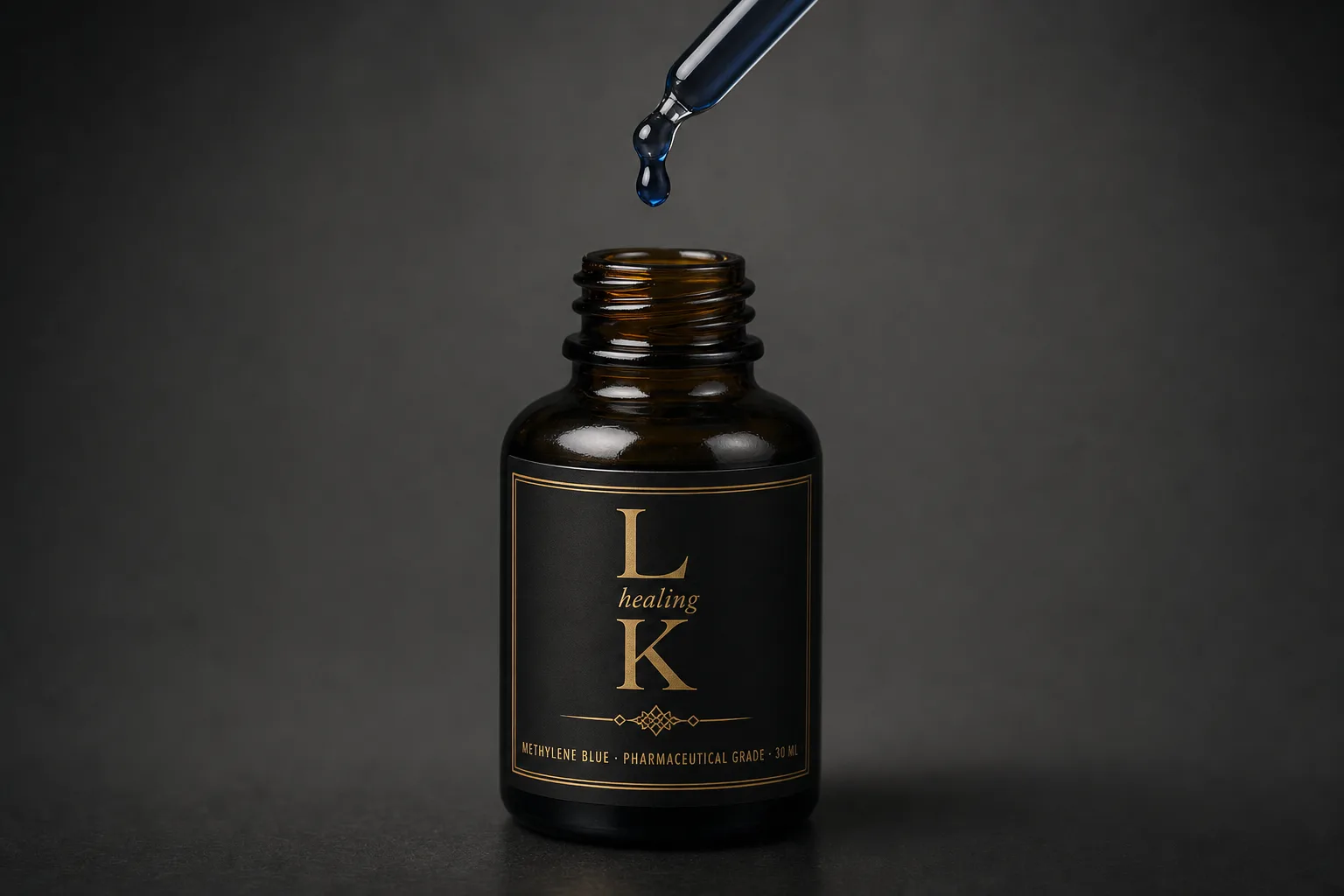
Methylene Blue
An old molecule. A new chapter. A genuine game-changer.
For 150 years, methylene blue has been quietly indispensable — used as a malaria treatment by Paul Ehrlich in 1891, as the world's first synthetic drug, and today on the WHO Essential Medicines list for methaemoglobinaemia. Now, modern research is uncovering something extraordinary about the same simple molecule: what it does to the mitochondria.
- USP gradePharmaceutical purity
- Cognitive supportClarity, focus, recall
- Mitochondrial fuelElectron transport boost
- 150-year safety recordWHO Essential Medicine
Why methylene blue is a genuine game-changer.
Most so-called nootropics arrive with a flashy logo, a four-week influencer cycle, and almost no clinical history. Methylene blue is the opposite. It is one of the oldest known synthetic molecules — first crystallised by Heinrich Caro in 1876, adopted by Paul Ehrlich as the founding tool of modern pharmacology, and still stocked in every major hospital today as the licensed antidote for methaemoglobinaemia and certain forms of septic shock. It is on the World Health Organisation Model List of Essential Medicines, and the FDA has prescribed it, under the name Provayblue, for over a century.
What has changed in the last decade is not the molecule. It is our understanding of what it does at low doses.
An alternative electron carrier
Every cell in the human body makes energy by passing electrons down a chain of proteins in the mitochondria. When that chain is damaged — by age, by toxins, by chronic disease, by oxidative stress — the cell's ability to produce ATP collapses. Methylene blue can step in as an auxiliary electron carrier, bypassing broken links in the chain and restoring energy production directly at the mitochondrial level. No other widely-available compound does this. (Tucker et al., 2018, Pharmacological Research)
A nootropic with a mechanism
A 2016 study at the University of Texas Health Science Center used low-dose methylene blue in healthy adults and found measurable increases in fMRI activity in the prefrontal cortex during attention tasks — alongside improved short-term memory. (Rodriguez et al., 2016, Radiology) This is what separates methylene blue from a stack of unverifiable nootropics: its mechanism is mapped, its dose-response curve is published, and the imaging is reproducible.
Neuroprotective potential
Preclinical research has demonstrated benefit in models of Alzheimer's disease, Parkinson's disease, traumatic brain injury, and stroke — all tracing back to the same root: rescued mitochondrial respiration and reduced oxidative damage. (Atamna and Kumar, 2010, Journal of Alzheimer's Disease) Human trials in cognitive decline are ongoing.
Antimicrobial & photodynamic
Methylene blue is one of the molecules at the foundation of photodynamic therapy: illuminated with red light, it generates singlet oxygen that destroys pathogens, biofilms, and certain tumour cells with surgical precision. It is in active clinical use against drug-resistant bacterial infections.
The dose is everything
The catch — and the reason quality matters — is that methylene blue's benefits follow a sharp hormetic curve. Low doses (0.5–4 mg/kg) are neuroprotective and pro-mitochondrial. High doses (above 10 mg/kg) flip the switch and become pro-oxidant. Industrial-grade methylene blue is contaminated with heavy metals and is unfit for human use under any circumstance. The difference between USP pharmaceutical grade and the dye on Amazon is the difference between medicine and poison.
Why we're launching it
We held this product for nearly a year while we located a USP-certified UK supplier we trust. Our methylene blue is independently lab-tested for heavy metals, dispensed in calibrated dropper bottles, and labelled with the exact same care we give every other product. No mystery dye. No re-bottled lab-grade chemistry. One molecule, one purity standard, one bottle worth carrying.
Methylene blue is sold as a wellness adjunct, not a treatment for any disease. Pregnant or breastfeeding individuals, anyone taking SSRIs, MAOIs, or other serotonergic medications, and anyone with G6PD deficiency should consult a doctor before use. Full dosing and contraindication information will ship with every bottle.
The short version.
Heavy-metal-tested. Not industrial dye. Independently certified.
Measurable improvements in attention, focus, and short-term memory in low doses.
Direct electron donor — restores ATP production in damaged cells.
WHO Essential Medicine. FDA-approved as Provayblue.
Calibrated dropper. Microdose protocol included with every bottle.
Same workshop, same signed label, same standard as our tinctures.